


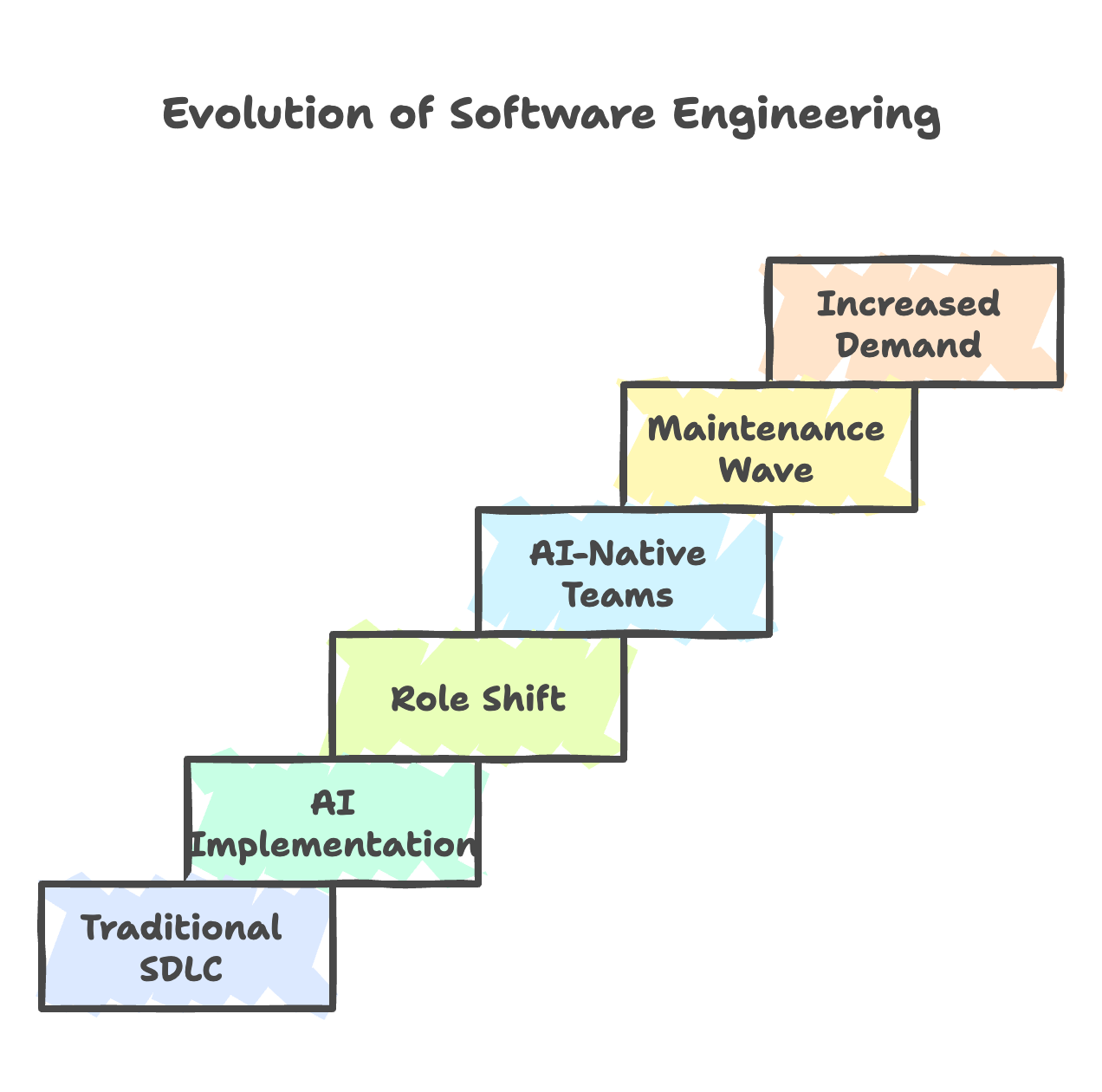
Software engineering was never just writing code. The SDLC always split across requirements, architecture design with trade-offs, implementation, testing, and code review. Implementation ran weeks to months, but it sat alongside everything else. The senior engineer’s value came from knowing which trade-offs break at scale, not from typing speed.
AI coding agents have compressed that implementation phase to minutes. The spec writing, the architecture decisions, the quality guarantees haven’t changed.
The data reflects this. Anthropic’s 2026 research shows engineers use AI in roughly 60% of their work but can fully delegate only 0-20% of tasks. On complex codebases, the speed gains can reverse. A controlled trial found AI tools slowed senior engineers down by 19% because time saved writing code was spent reviewing AI output instead.
The engineering role is already shifting from implementer to architect. AI-native teams release software 2x faster. The value has moved from “person who writes the code” to “person who defines the constraints and validates the output.”
A maintenance wave is building alongside this. Non-technical professionals are shipping apps through vibe coding. 27% of all AI-assisted work consists of tasks that wouldn’t have happened without AI. All of that new software needs engineers who understand what’s running underneath.
The trajectory: more software shipped, more engineers needed, not fewer.